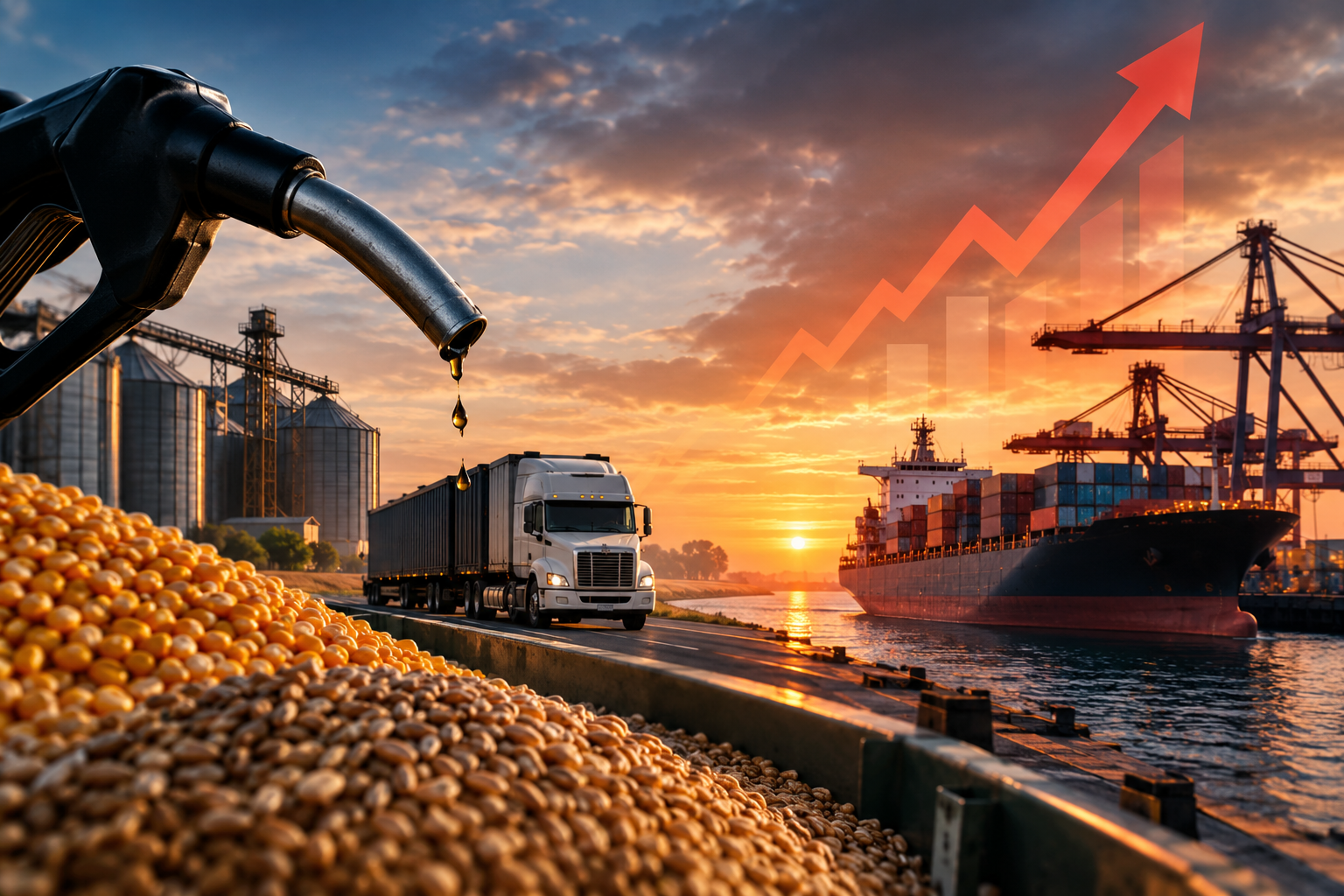
Freight Under Pressure: How the Diesel Crisis Affects Your Business (and What to Do Now)
If you import wheat, corn or soy, this news will hurt your pocket: freight rates are rising due to diesel scarcity. We explain why it’s happening, how long it may last and what you can do today to protect your margins.
The surge in diesel prices is directly impacting grain transportation costs. If your supply chain relies on importing wheat, corn or soy, it is essential to understand the source of this pressure and act immediately to protect your margins.
What Is Happening?
Diesel is the fuel that powers every link in the grain trade: from harvest, through land transport to the port, to the sea voyage. In the week of September 14, diesel prices in the U.S. hit a record $6.285 per gallon, jumping almost 32 cents in just seven days.
This increase is due to a combination of factors:
- Reduced maritime traffic through the Strait of Hormuz, a consequence of the conflict between the U.S. and Iran.
- Critical inventories: U.S. diesel reserves fell to the lowest level recorded in a September month since 1982.
Impact on Freight
The price rise is evident at sea. According to our source, freight from the U.S. and Europe to Asia has already increased by 15% to 20%. Other data point in the same direction: the U.S. Gulf to Japan route reached $69.75 per metric ton, 32% higher than the previous year.
Moreover, the transport of fuel itself has become more expensive. In early October, the average daily revenue of crude oil tankers exceeded $500,000, ten times the 2025 average. It is a vicious circle: fuel becomes scarce, moving fuel costs more, and that bill is passed along the entire chain, including the wheat that arrives at your warehouse.
Demand also shows no sign of easing. The dry bulk market remains robust in 2026 thanks to grain exports, especially soy and wheat. With high volumes and little room for maneuver, shipowners have the power to keep rates high.
Duration Outlook
The International Energy Agency (IEA) forecasts that diesel supply will remain under pressure well into 2027. This is not a weeks‑long anomaly; medium‑term planning is required.
What to Do Now: 6 Practical Measures
- Review your landed costs. Recalculate the real price of each operation (product, freight, insurance, port logistics) using current rates, not those from the last quarter.
- Negotiate forward freight contracts. If you can lock in rates or spread risk across several shipments, do it before further hikes occur.
- Diversify origins. Compare suppliers on shorter routes or with less exposure to current bottlenecks. A slightly more expensive origin may be offset by lower freight.
- Include fuel adjustment clauses in contracts with suppliers and customers to protect your margin and avoid surprises.
- Adjust inventory wisely. Anticipating purchases can protect you, but tying up too much capital at high prices also creates costs. Find the middle ground.
- Communicate transparently with your customers. If you need to pass on part of the increase, explain it with data. It is better to give advance notice than to renegotiate under pressure.
Conclusion
The diesel crisis is not a passing issue; its impact extends across the entire grain logistics chain. Adopting a proactive approach – reviewing costs, securing rates, diversifying routes and maintaining clear communication – will allow you to mitigate pressure on margins and keep your business competitive in a volatile environment.
Need help with your logistics?
Our team is ready to help you find the best solution for your business.
Let's talk